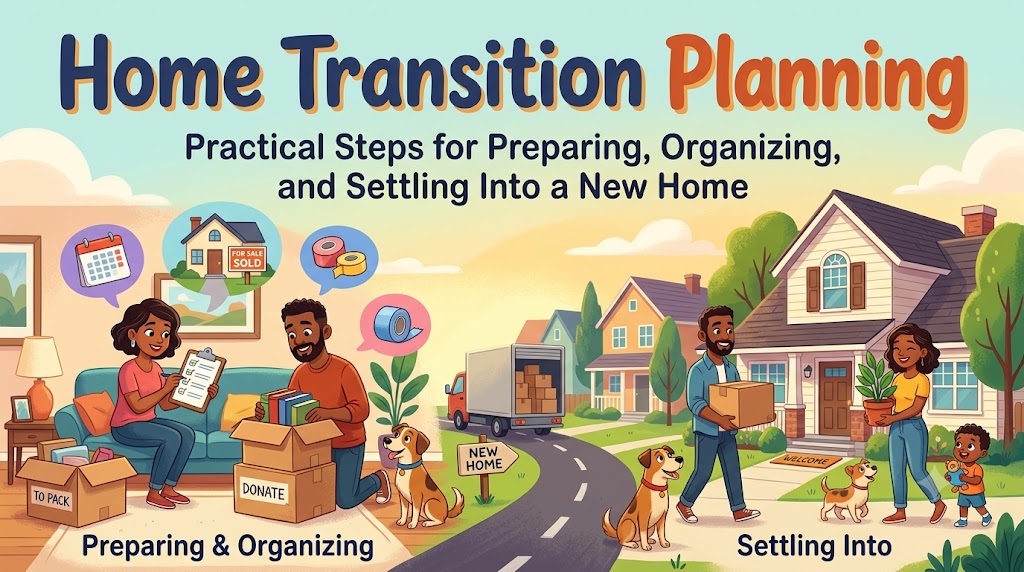
Home Transition Planning: Practical Steps for Preparing, Organizing, and Settling Into a New Home
Moving into a new home is more than transporting boxes. A thoughtful transition plan can make preparation easier, reduce confusion on moving day, and help you settle into your new space with less stress.
Moving to a new home can be exciting, but the transition often involves many small
responsibilities at the same time. Packing, organizing belongings, changing addresses,
preparing utilities, cleaning the new space, transporting furniture, and deciding where
everything should go can quickly become overwhelming without a plan. A structured approach
makes the process easier because each task can be handled at the right time.
The goal is not to make the move perfect. The goal is to create an organized transition
where important tasks are completed first, essential belongings remain accessible, and
the new home gradually becomes comfortable and functional. Planning before moving day can
also reduce unnecessary purchases because you have a better understanding of what you already
own and what the new home actually needs.
Start With a Clear Home Transition Plan
Understand the New Space
Before packing everything, think about how the new home will actually be used. Room sizes, storage areas, entrances, stairs, electrical outlets, windows, and existing furniture can influence how belongings should be organized.
Reduce What You Need to Move
Moving is a useful opportunity to review your belongings. Items that are broken, duplicated, unused, or no longer suitable for your lifestyle may not deserve space in the new home.
Your Moving Process at a Glance
Breaking the transition into stages makes a large project easier to manage. You do not need to complete everything at once. Work through each stage and keep important tasks visible.
Prepare
Review belongings, organize paperwork, measure spaces, and create a realistic moving schedule.
Pack
Pack room by room, protect fragile items, and clearly label boxes for easier unloading.
Transition
Move essential belongings first and keep important documents and personal necessities accessible.
Settle
Focus on essential rooms first, organize gradually, and improve the home over time.
Pack for the New Home, Not Just the Move
Smart Packing Saves Time Later
Packing everything into random boxes may make the moving stage faster, but it can create
hours of confusion after arrival. A better approach is to organize boxes according to
rooms, categories, and priority.
Use sturdy containers appropriate for the items inside. Protect fragile belongings and
avoid making boxes unnecessarily heavy. Keep important documents and valuable personal
items separate from ordinary household boxes.
Make Every Box Easy to Identify
Write the Destination
Put the room name clearly on more than one side of the box. This helps movers and family members place boxes in the correct area.
Describe the Contents
Instead of writing only “Kitchen,” add a simple description such as cookware, glasses, or small appliances.
Mark Important Boxes
Identify boxes that should be opened immediately, especially those containing first-day essentials.
Prepare a First-Night Essentials Kit
One of the most useful moving habits is preparing a separate bag or box containing the things you are likely to need immediately. This prevents you from searching through dozens of boxes after a long moving day.
Set Up the Most Important Rooms First
Bedroom
Make the sleeping area functional first. Set up the bed, basic lighting, clothing, charging points, and personal essentials before spending time on decoration.
Kitchen
Focus on the items needed for everyday meals. Organize frequently used cookware and utensils where they are easy to reach.
Bathroom
Arrange toiletries, towels, cleaning supplies, and other daily essentials so the room is immediately usable.
Home Office
If you work or study from home, prioritize the desk, chair, computer, connectivity, lighting, and basic organization.
Do Not Forget the Administrative Side of Moving
Update Important Information
A home transition can involve several administrative changes. Handle these gradually instead of trying to remember everything on moving day.
Create a Home Information Folder
Keeping important home information together can make future maintenance and organization much easier.
Give Yourself Time to Fully Settle
Make It Functional
Focus on sleeping arrangements, bathroom access, basic food, lighting, charging, cleaning, and other immediate needs. Do not worry about making every room perfect.
Build Routine
Organize frequently used belongings, establish basic storage locations, arrange your workspace, and notice anything that needs attention.
Improve the Space
After living in the home for a while, you will understand what works and what does not. Make improvements based on real daily experience rather than assumptions.
Common Transition Problems and Practical Responses
Avoid opening everything randomly. Start with essential rooms and work through boxes according to priority and labeling.
Measure the available space and access points before moving heavy furniture. Consider alternate room arrangements when necessary.
Keep frequently used belongings together and create consistent storage locations as you unpack.
Do not try to complete every room immediately. Establish a few functional areas first, then improve the remaining spaces gradually.
Keep a small transition budget for cleaning materials, basic hardware, storage solutions, or other practical needs.
Live in the space before making every design decision. Daily use often reveals better locations for furniture and storage.
New Home Transition Checklist
Use this final review to make sure the most important parts of your transition have been considered. You can work through the list gradually rather than completing everything at once.
Make the New Home Feel Like Home, One Step at a Time
A successful home transition does not require everything to be perfect on the first day. The most effective approach is to prepare carefully, reduce unnecessary belongings, pack with purpose, protect important items, establish essential rooms first, and gradually organize the rest of the home. Once the basics are working, you can improve the space according to your real routines and needs. A thoughtful transition turns a complicated move into a manageable series of practical steps.