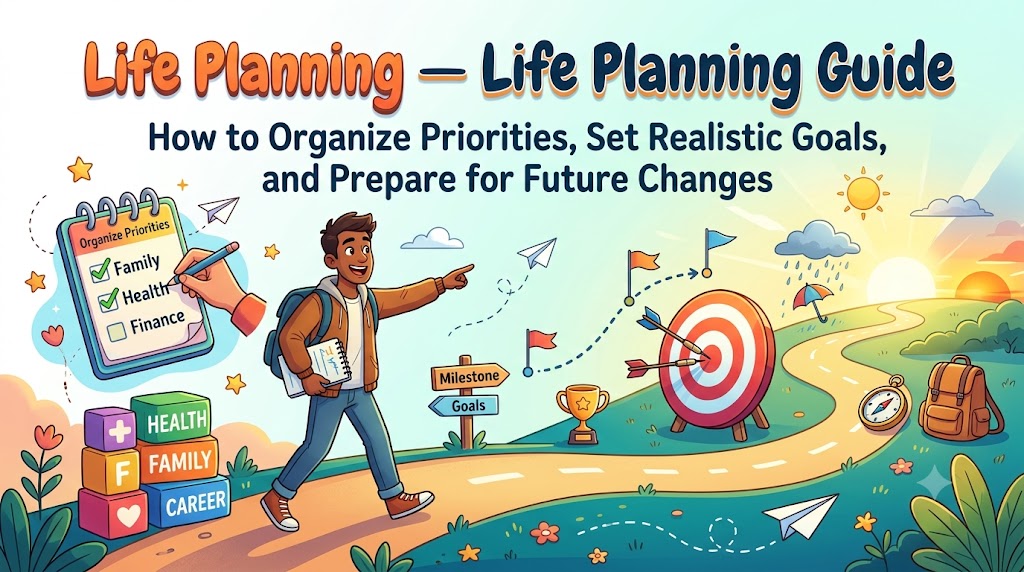
Life Planning Guide: How to Organize Priorities, Set Realistic Goals, and Prepare for Future Changes
Life planning is not about predicting every detail of the future. It is about understanding what matters, making thoughtful decisions, creating realistic goals, and building enough flexibility to respond when life changes.
Why Life Planning Matters
Everyday responsibilities can make it difficult to step back and think about the bigger picture. Work, family responsibilities, finances, personal interests, learning, and household tasks can all compete for attention. Without a simple planning system, important priorities can easily become mixed with less important activities.
A useful life plan creates direction without requiring every future event to be controlled. It can help you decide where to spend your time, which goals deserve attention, what resources you need, and how you want to respond to possible changes.
Decide What Deserves Your Attention
Identify responsibilities that directly affect your basic stability, such as work, important household responsibilities, financial commitments, and necessary daily tasks.
These are areas that support your longer-term progress, including education, career development, savings, relationships, skills, and personal projects.
Leave space for activities that give your life value and enjoyment. Hobbies, creativity, social time, travel, and personal interests can contribute to a balanced plan.
Some plans should remain adjustable. Flexible areas allow you to respond when schedules, opportunities, responsibilities, or circumstances change.
Turn Broad Ideas Into Realistic Goals
A life goal becomes easier to manage when it is translated into a specific result and a practical next step. Instead of trying to change everything at once, choose a small number of goals that fit your current resources, responsibilities, and available time.
The Reality Check
Before committing to a goal, consider why it matters, what it requires, how much time you can realistically give it, and what could interfere with progress. A goal that fits your real life is usually easier to maintain than an ambitious plan that depends on perfect circumstances.
Describe exactly what you want to accomplish instead of using a vague statement.
Give the goal a reasonable period so you can track progress without creating unnecessary pressure.
Divide the larger objective into smaller tasks that can be completed individually.
Check your results regularly and adjust the plan when the original approach is no longer practical.
Plan for Today, the Next Few Months, and the Longer Term
Short-Term Planning
Short-term planning focuses on the next few days or weeks. It can include appointments, household tasks, work deadlines, immediate purchases, study sessions, and other activities that require direct attention.
Medium-Term Planning
Medium-term plans can cover several months. This is useful for professional projects, learning goals, savings targets, home improvements, travel preparation, or building a new routine.
Long-Term Planning
Long-term planning looks further ahead. Career direction, major financial goals, lifestyle preferences, personal development, and future responsibilities can be considered without needing an exact prediction.
A Good Plan Should Support More Than One Area of Life
Progress Without Overload
It is easy to create a plan filled with career targets, financial goals, learning projects, household responsibilities, and personal commitments. The problem is that every goal requires time and attention.
A better approach is to decide which areas require active improvement right now and which areas simply need maintenance.
When priorities are limited, you can give important projects better attention instead of constantly switching between unfinished tasks.
Protect Personal Time
Personal time should not always be treated as spare time that disappears whenever another task appears. Rest, hobbies, social activities, and quiet time can make a demanding schedule easier to sustain.
Planning personal time also makes it easier to recognize when your schedule has become unrealistic.
A balanced plan does not mean every area receives equal attention. It means the important areas are not repeatedly ignored.
Build Routines That Make Progress Easier
Goals describe where you want to go, while routines describe what you repeatedly do. A simple routine can reduce the number of decisions you need to make every day and create a reliable structure for important work.
Set Direction
Review the most important task for the day and identify anything that has a fixed deadline.
Protect Focus
Give your highest-priority task a dedicated period instead of allowing smaller activities to consume the day.
Close the Day
Check what was completed, move unfinished tasks forward, and prepare for the following day.
Review Direction
Look at your upcoming responsibilities and decide whether your current schedule still matches your priorities.
Prepare for Future Changes
A strong life plan should have room for change. Some changes are expected, while others appear suddenly. Preparation is mainly about maintaining options rather than trying to control every outcome.
Career Changes
Skills, industries, employers, and job responsibilities can change over time. Keep your knowledge current, maintain useful professional relationships, and periodically review whether your current direction still supports your longer-term goals.
Financial Changes
Income and expenses may change because of new responsibilities, purchases, work transitions, or unexpected costs. A flexible budget and a reasonable savings habit can make these transitions easier to manage.
Household Changes
Moving, changing living arrangements, taking on new responsibilities, or reorganizing a household can affect your schedule. Planning important documents, expenses, possessions, and routines can reduce stress.
Personal Direction
Your interests and goals may change as you gain experience. Changing direction does not automatically mean previous efforts were wasted. Skills and knowledge gained along the way can often support a new path.
Include Money in Your Life Plan
Financial planning is one part of life planning because money affects many everyday decisions. You do not need an overly complicated system. Start by understanding regular income, recurring expenses, flexible spending, savings goals, and major upcoming costs.
Reviewing finances regularly can help you identify unnecessary pressure before it becomes a larger problem. It can also make future decisions easier because you have a clearer idea of what is affordable.
Create Financial Breathing Room
Financial flexibility can provide more choices when life changes. The goal is not to predict every unexpected expense, but to avoid building a plan that leaves no room for surprises.
Even small, consistent financial habits can support larger future decisions when maintained over time.
Your Life Plan Should Change With Your Life
Monthly Review
Look at your recent progress, unfinished goals, spending patterns, time use, and upcoming responsibilities. Decide what needs attention during the next month.
Quarterly Review
Every few months, step back from daily tasks and consider whether your larger goals still make sense. Remove outdated objectives and update priorities where necessary.
Annual Review
Once a year, examine the bigger picture. Consider your career direction, skills, finances, relationships, routines, major plans, and the type of future you are trying to build.
A Simple Life Planning Reset
If your current plans feel confusing or overloaded, you do not need to rebuild your entire life in one day. A short reset can help you create a clearer starting point and reduce unnecessary complexity.
Write down your current responsibilities, unfinished goals, upcoming commitments, and ideas that are taking space in your mind.
Separate urgent responsibilities from important long-term goals. Decide which areas deserve the most attention.
Select a few realistic goals, assign practical next steps, and place them into your calendar or weekly routine.
Build a Direction, Not a Perfect Prediction
Life planning works best when it gives you direction while leaving room for reality. Organize your priorities, choose goals that fit your circumstances, build useful routines, prepare your finances and responsibilities, and review your progress regularly. When circumstances change, adjust the plan instead of assuming the entire direction has failed.
The most useful life plan is one you can actually live with. It should help you decide what matters today while keeping your attention connected to the future you want to create.