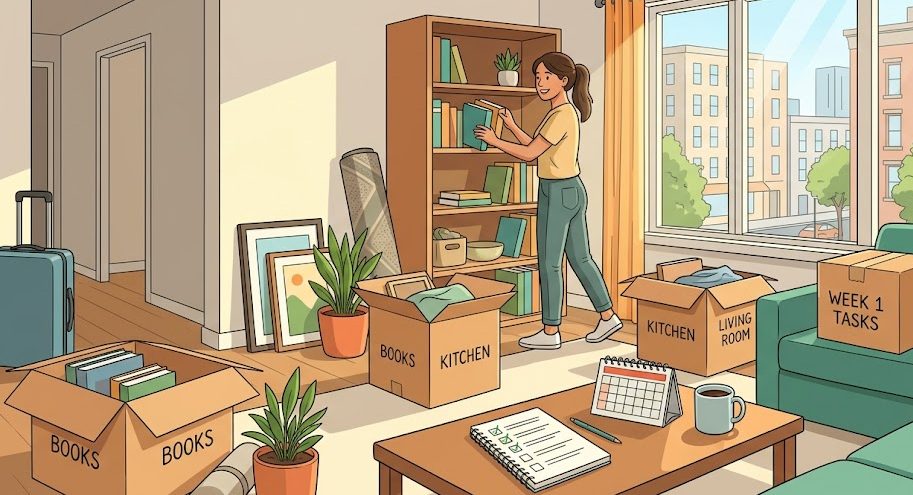
The first week is less about finishing everything and more about making your new home work for everyday life.
After the boxes arrive and the excitement of moving begins to settle, a few practical priorities can make the new space easier to live in. From checking essential services to organizing frequently used rooms, a thoughtful first-week plan can help you settle in without unnecessary pressure.
Moving into a new home can be both exciting and tiring. Even when the actual move goes smoothly, the first few days often involve a long list of small tasks. You may still have boxes in several rooms, furniture that needs adjusting, household supplies that have not found permanent locations, and administrative details waiting for attention.
It is tempting to unpack everything immediately, but that is rarely necessary. The first week is a good time to focus on the things that affect comfort, safety, communication, cleanliness, and daily routines. Once those basics are handled, you can gradually decide how you want the rest of the home to look and function.
Make the Home Functional Before Making It Perfect
On the first day, concentrate on the rooms and services you need immediately. A usable bedroom, bathroom, kitchen area, and basic living space will make the rest of the week much easier.
Locate the essentials before opening boxes randomly. Find basic cleaning supplies, toiletries, chargers, bedding, simple food, drinking water, and any household items that you expect to use that evening.
Set up the bed, bedding, lighting, and the items you normally need before going to sleep.
Put out towels, toiletries, soap, toilet paper, and other basic personal supplies.
Keep basic meals, snacks, drinks, dishes, and utensils accessible while the kitchen is still being organized.
Place frequently used electronics and charging cables somewhere easy to find.
Walk Through the Home Again
The first walk-through may have happened during the move, but another inspection is useful once your belongings are inside. You can now notice practical issues that were easy to overlook earlier.
Doors & windows
Check that commonly used doors and windows open, close, and latch as expected.
Water areas
Look around sinks, toilets, showers, and visible connections for anything unusual.
Walls & floors
Notice marks, damage, loose areas, or other conditions that may need documenting or attention.
Storage
Open closets and cabinets and consider which areas will be most useful for everyday belongings.
Controls
Identify electrical panels, heating or cooling controls, water shutoffs, and other important systems.
Entry points
Make sure you understand the main entrances, keys, access codes, garage access, and other entry arrangements.
Confirm the Services You Depend On
Once the immediate moving work is under control, confirm that the home’s essential services are functioning as expected. Depending on the property and your location, these may include electricity, water, heating or cooling, internet, waste collection, and other household services.
Do not rely entirely on memory. Keep account information, service dates, contact details, and confirmation numbers together in one location. A small digital note or organized folder can save time if you need to contact a provider later.
Confirm essential household services.
Check connection or installation arrangements.
Learn collection schedules and rules.
Review relevant community or property procedures.
Learn the Important Safety Basics
The first week is a good time to understand the basic safety features of your home. You do not need to turn this into a complicated inspection, but you should know where important equipment and exits are located.
Locate smoke alarms and carbon monoxide alarms where applicable, identify exits, and understand where essential shutoffs and panels are located. If you discover a potentially serious issue involving electrical systems, gas, structural conditions, or another specialized area, consider getting help from an appropriately qualified professional.
Keep important pathways clear and understand the main ways out of the home.
Know where major utility controls are located and keep access areas unobstructed.
Understand the home before settling into a routine.
Set Up the Rooms You Use Most
Do not unpack based on which room looks most unfinished. Prioritize rooms that have the biggest effect on your daily routine.
Kitchen
HIGH PRIORITYPut frequently used cookware, dishes, utensils, food, and cleaning supplies in convenient locations. You can reorganize cabinets later after learning your cooking habits in the new space.
Bedroom
HIGH PRIORITYFinish the sleeping area before spending time on decorative details. Comfortable bedding, lighting, clothing storage, and easy access to nighttime essentials are usually enough initially.
Bathroom
Organize the items you use every day and keep basic cleaning supplies accessible. Avoid filling every storage space immediately because your needs may change once you establish a routine.
Work or study area
If you work or study from home, make this area functional early. Focus on your desk, chair, lighting, internet connection, power access, and frequently used equipment.
Clean as you unpack.
Clean Small Areas Instead of Tackling the Whole House
After moving, it is easy to postpone cleaning because there are still boxes everywhere. However, a small cleaning routine can prevent dust, packaging materials, and clutter from accumulating.
Rather than scheduling one enormous cleaning session, clean an area when you finish unpacking it. Break down cardboard, remove unnecessary packaging, wipe shelves before filling them, and keep a basic supply of cleaning materials accessible.
Handle Important Administrative Details
By the middle of the first week, some of the physical moving work may be under control. This is a useful point to review administrative tasks that are easy to forget when your attention is focused on boxes and furniture.
Address updates
Review accounts, services, subscriptions, and other records where your current address may need to be updated.
Important documents
Keep property, rental, insurance, utility, and other relevant paperwork organized and accessible.
Local information
Save useful information such as service contacts, waste schedules, building rules, and emergency contacts where appropriate.
Notice What Is Convenient and What Is Not
One of the biggest advantages of the first week is that you begin learning how the home actually works for you.
Maybe the keys naturally collect near one entrance. Perhaps the coffee supplies would be easier to reach in another cabinet. You might discover that a particular closet needs different storage or that a piece of furniture blocks a useful pathway.
Do not treat your first arrangement as permanent. Give yourself permission to make small adjustments as you notice patterns.
Which items do you reach for every day? Those items should usually receive the easiest storage locations.
If you repeatedly walk across the room to reach something, that is useful information about your organization system.
Where do bags, mail, shoes, chargers, or other everyday items naturally collect? That may indicate where a practical storage solution belongs.
Small changes are usually easier to evaluate than completely redesigning every room at once.
Finish the Week by Reducing the Remaining Clutter
At this point, you should have the most important areas functioning. Now you can make progress on the remaining boxes without feeling that everything has to be completed immediately.
Group similar items
Keep related belongings together while deciding where they should live permanently.
Give items a home
Choose practical locations based on frequency of use rather than simply filling empty spaces.
Question leftovers
If something has remained unpacked because you are unsure whether you need it, consider whether it deserves permanent storage.
Check What You Have Accomplished
Let the First Week Be About Settling In
The first week in a new home does not need to be a race to empty every box. A better approach is to create a comfortable and functional foundation. Start with sleeping, bathing, eating, communication, safety, and other everyday necessities. Then work outward toward organization and less urgent projects.
Use the first few days to learn the property as well. Knowing where important controls are located, understanding how the rooms work for your routine, and noticing where clutter naturally collects can help you build better systems later.
It is also perfectly reasonable for some rooms to remain unfinished after the first week. A home is not organized only through unpacking. Good organization develops through observation, adjustment, and repeated everyday use.
A successful first week is not measured by how empty the boxes become. It is measured by how comfortably and confidently you can begin living in the new space.
By focusing on practical priorities, working through manageable tasks, and giving yourself time to adjust, the transition into a new home can become much less stressful. The goal is simply to make the space work for real life, one useful improvement at a time.