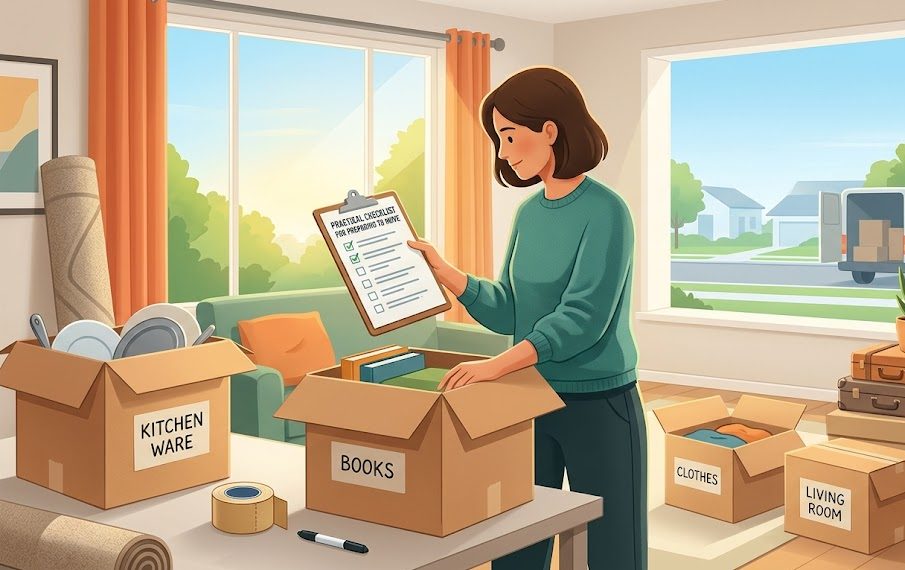
Moving into a new home is an exciting milestone, but the days leading up to the move can quickly become overwhelming. Packing, cleaning, arranging transportation, checking utilities, and organizing important documents all require attention. The easiest way to make the process feel manageable is to prepare step by step instead of trying to do everything at once.
A practical moving checklist helps you stay organized, reduce last-minute stress, and settle into your new space more comfortably. From preparing your belongings before moving day to organizing the first few days in your new home, these simple steps can help make the transition smoother.
Start With a Simple Moving Plan
“`Before packing the first box, take a few minutes to create a basic moving plan. Write down your moving date and list the major tasks that need to be completed before then. You do not need a complicated schedule. A clear list of priorities is often enough to keep the process under control.
Try dividing your preparation into smaller stages. You might spend one day sorting belongings, another day gathering supplies, and several days packing different rooms. When tasks are spread out, moving day feels far less rushed.
“`Sort Before You Pack
Moving provides a useful opportunity to look closely at the things you own. Many homes contain items that are rarely used, stored out of sight, or no longer useful. Packing everything without sorting first can create unnecessary work and fill your new home with clutter.
Go through each room and separate belongings into simple groups. Decide what you want to keep, donate, recycle, sell, or discard. Storage areas, closets, drawers, and cabinets are good places to start because they often contain forgotten items.
If an item has no clear purpose in your new home, consider whether it is worth packing and transporting.
Gather Your Packing Supplies Early
One common mistake is waiting until the final days to collect boxes and packing materials. Preparing your supplies early allows you to pack gradually and avoid unnecessary interruptions.
Useful supplies to prepare:
- Strong boxes in several sizes
- Packing tape and a tape dispenser
- Markers or labels
- Bubble wrap or protective material
- Scissors and a box cutter
- Small bags for loose items
- Cleaning supplies for the new home
Try not to overload large boxes with heavy belongings. Books, tools, and similar items are easier to carry when packed in smaller boxes.
Pack One Room at a Time
Packing random items from different rooms into the same boxes can make unpacking frustrating later. A room-by-room approach keeps belongings organized and makes it easier to place boxes in the correct location when you arrive.
Start with things you do not use every day. Seasonal clothing, books, decorations, extra kitchen items, and stored belongings can usually be packed well before moving day. Keep everyday essentials available until the final stage.
Instead of writing only “Kitchen,” use descriptions such as “Kitchen – Plates,” “Kitchen – Cooking Tools,” or “Kitchen – Pantry Items.” Specific labels make unpacking much faster.
Prepare a First-Day Essentials Bag
After carrying boxes and arranging furniture, the last thing you want is to search through dozens of boxes for a phone charger or toothbrush. Prepare one separate bag or box containing everything you may need during your first day and night.
- Phone chargers
- Important documents
- Basic toiletries
- Medication you need regularly
- A change of clothes
- Water and simple snacks
- Toilet paper and towels
- Basic cleaning products
- A small toolkit
Keep these essentials with you rather than loading them into the moving vehicle with everything else.
Inspect the New Home Before Moving In
If you have access to the property before moving day, take time to walk through each room. Check doors, windows, lights, electrical outlets, taps, sinks, toilets, and other important features.
Look for areas that may need cleaning, maintenance, or repair. It is much easier to notice these things before furniture and boxes fill the rooms.
If you are renting, taking a few photos of the property’s condition can also help you keep a record of existing marks or damage.
Clean the Space Before Bringing in Furniture
Cleaning an empty room is much easier than cleaning around furniture and stacks of boxes. Before moving everything inside, focus on the areas you will use first.
Prioritize these areas:
Kitchen counters and cabinets, bathrooms, floors, storage spaces, shelves, and frequently touched surfaces.
You do not have to complete every cleaning task immediately. Preparing the most important rooms first is usually enough to make your first few days more comfortable.
Arrange Utilities and Important Services
Before moving day, confirm that essential services are active or scheduled. Depending on your location, this may include electricity, water, gas, internet, and waste collection.
Internet service is especially worth arranging in advance because installation may require an appointment. Checking these details early can prevent unnecessary delays after you move in.
It is also a good time to update your address with important organizations and services where necessary.
Measure Large Furniture Before Moving
Before transporting large furniture, measure important spaces in your new home. Check entry doors, hallways, staircases, elevators, and narrow corners.
Compare these measurements with larger items such as sofas, wardrobes, beds, dining tables, and appliances. Discovering that a large piece of furniture does not fit through the entrance on moving day can create an avoidable problem.
Practical tip: If furniture needs to be disassembled, prepare the necessary tools before moving day and keep screws and small parts safely labeled.
Create a Simple Moving Day Routine
A little structure can make moving day much easier. Decide in advance who will handle important responsibilities, especially when several people are helping.
- Check that important documents and essentials are with you.
- Load larger items carefully.
- Keep fragile boxes clearly marked.
- Do a final walkthrough of your old home.
- Check closets, drawers, cabinets, and storage areas.
- Confirm that nothing important has been left behind.
Unpack the Most Important Rooms First
There is no need to unpack your entire home on the first day. Trying to complete everything immediately can quickly become exhausting.
Focus first on the spaces that will help you feel comfortable and functional.
- Bedroom essentials
- Bathroom supplies
- Kitchen basics
- Living area necessities
- Remaining storage and decorative items
Setting up your bed, bathroom supplies, and basic kitchen items can make your first night much more relaxing.
Check Basic Safety Features
Once you are settled, take time to become familiar with the safety features and important systems in your new home. Make sure doors and windows lock properly and identify important household controls.
Locate electrical panels, water shut-off points, and any safety equipment available in the property. Keeping this information in an accessible place can be useful if you need it later.
Make the Space Feel Like Home
“`Moving is not only about transporting belongings from one place to another. It is also the beginning of learning how a new space fits into your daily routine.
Give yourself time to organize gradually. You may discover that furniture works better in a different location or that your original storage plan needs adjusting. Start by making the home comfortable and functional, then slowly add decorative and personal touches.
By planning ahead, focusing on practical priorities, and handling one task at a time, moving into a new home can feel much more organized and enjoyable. You do not need everything to be perfect on the first day. A steady approach will help you settle in comfortably and turn your new space into a home.
“`